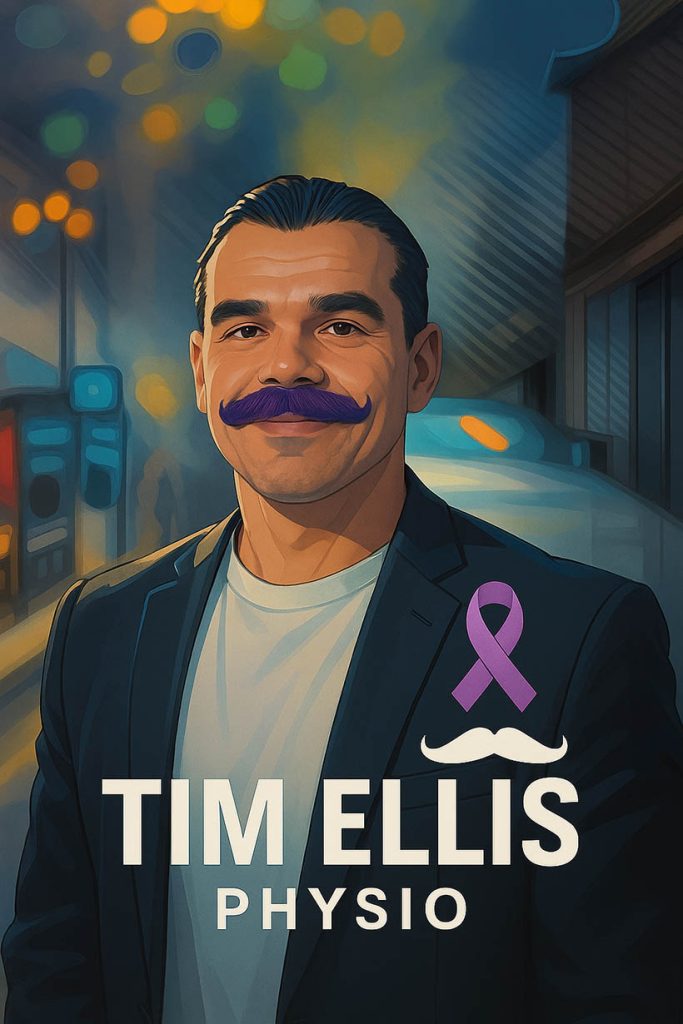
By Tim Darcy Ellis
As we come out of November, I find myself reflecting on the importance of men’s health and on the work of the Movember organisation — a cause I’ve been proud to support for many years through fundraising and education. Movember is more than a quirky moustache campaign. It has become a global movement that shines a light on the challenges men face throughout their lives, both physically and mentally. And as a man “of a certain age” myself, I’ve seen first-hand how these issues evolve, how they affect men differently, and how critical it is that we keep the conversation alive long after November ends.
One of the realities we cannot ignore is that men struggle with mental health in ways that are often silent and deeply internal. Statistically, men take their own lives at far higher rates than women — and tragically, somewhere in the world every six minutes a man dies by suicide. Many men still carry the belief that their worth lies in being the breadwinner, the provider, the protector. These expectations can be hard to sustain in a world where roles are changing, families look different, and diversity is finally embraced. Men are also less inclined to talk openly about their emotions. Instead, we tend to connect through “side-by-side” activities — working on something together, playing sport, or spending time with mates without ever naming what’s going on under the surface.
As men age, they face significant physical challenges as well. Prostate cancer is the second most common cancer in Australia. Even without cancer, the prostate naturally enlarges, leading to urinary symptoms such as reduced flow, dribbling, retention, urgency, and interrupted sleep. Sexual confidence can decline, and erectile dysfunction becomes more common — especially after prostate surgery or treatment. These issues can deeply affect a man’s sense of identity, intimacy, and emotional wellbeing. And importantly, they don’t only affect the man; they affect partners, relationships, and families.
The positive change — and it is happening — is that men are starting to come forward. Over the past two to three years, I’ve seen more men walk through my clinic door ready to talk about these issues. I credit Movember for creating a safe, public forum that normalises the conversation. It has opened the door for men to bring their partners to appointments, to ask questions that once felt taboo, and to seek help early rather than silently endure discomfort or loss of confidence.
In the clinic at Darlinghurst, I’m able to offer practical, evidence-based solutions that genuinely help. Real-time ultrasound allows me to assess pelvic floor control, bladder behaviour, and muscle coordination with accuracy — and it provides excellent biofeedback when retraining pelvic floor function. I also use BTL Focused Shockwave Therapy, which I’ve found highly effective in managing benign prostate hyperplasia (BPH), chronic prostatitis, and erectile dysfunction. These are conditions men often assume they must “just live with”, but that’s simply not true. With the right assessment, targeted intervention, and open communication, function and confidence can be significantly improved.
I’m proud to be part of a growing movement advocating for men’s health — not just during November, but throughout the year. Men deserve the same openness, respect, and access to treatment that we expect in every other area of healthcare. My role is to create a space where these conversations can happen honestly and privately, and where men can find real solutions for real problems.
If Movember has taught us anything, it’s that awareness changes outcomes — but action changes lives. And I’m committed to being part of that change for every man who walks into my clinic.