Lower Back & Sciatica Treatment in Darlinghurst
Restoring Strength, Mobility, and Confidence in One of the Body’s Most Vital Structures
Low back pain is one of the most common problems I see — not because the back is weak, but because we often don’t use it in the way nature intended.
The lower back was designed to be a strong, robust, and flexible structure, capable of supporting our torso, controlling our movements forward, backward, and sideways, and protecting our vital organs.
At Combined Clinics Physiotherapy, my goal is to help people understand, respect, and rebuild the lower back’s natural strength and versatility — to move well again, free of fear and restriction.
I’m proud to work collaboratively with the chiropractors, doctors, exercise physiologists, personal trainers, and other allied health professionals at Combined Clinics. This integrated model means patients receive comprehensive care — physical, functional, and holistic.
I strongly believe in the biopsychosocial model of care — that pain is influenced not just by the body, but by how we think, feel, and live. Understanding each person’s social environment, work, and stress levels allows me to design programs that are both realistic and sustainable.
Ready to Begin Your Recovery?
In physiotherapy, we often classify back pain as acute, subacute, or chronic, because each behaves differently and responds best to specific strategies.
- Acute pain may respond well to specific, direction-oriented exercise, gentle movements, massage and reassurance.
- Subacute pain benefits from progressive mobility work and strengthening.
- Chronic or recurrent pain requires a combination of manual therapy, movement retraining, education, and often addressing lifestyle and emotional factors.
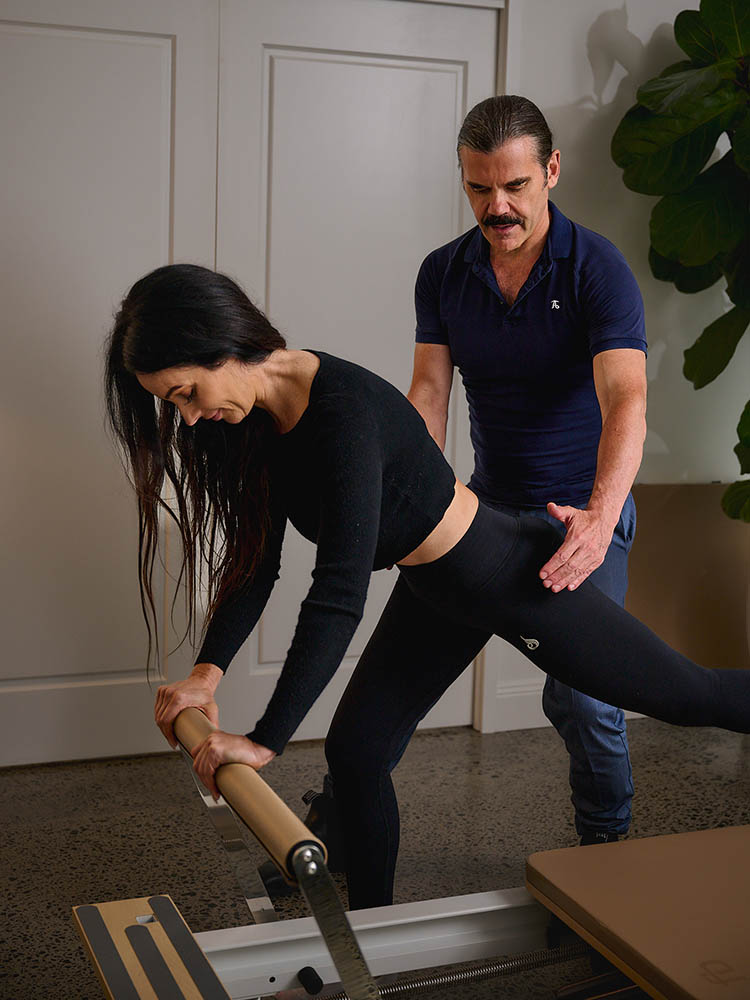
No matter the stage, my cornerstone is always a detailed hands-on assessment, manual therapy, and an individualised exercise program tailored to the person — not just the diagnosis.

Tim’s Approach to Back and Sciatica Rehabilitation
Every back is different, and every recovery pathway is unique. My approach includes:
- Comprehensive physical assessment — including postural, flexibility, and movement testing.
- Manual therapy and mobilisation — to restore movement and ease neural tension.
- Core function testing using real-time ultrasound — the most accurate way to assess the pelvic floor and transversus abdominis muscles in real time.
- Objective strength measurement using our VALD performance systems, allowing us to track progress scientifically.
- Structured exercise prescription designed to restore spinal stability, control, and confidence.
- Education and lifestyle integration to ensure the changes last well beyond the clinic.
I also use shockwave therapy, dry needling, or neural mobilisation where appropriate, particularly in chronic or long-standing cases.
A personal perspective on low back pain
Over the years, I’ve come to see that back pain is rarely about one simple cause. It’s about how we use our bodies, what’s happened to us, how we live, and how we adapt to the stresses of modern life.
Our lumbar spine is made up of five vertebrae, each cushioned by a disc that gets thicker the lower that you go. Those discs are meant to absorb force, separate the vertebrae and facilitate mobility.
But with long hours of sitting, heavy lifting at the gym, repetitive strain, and the demands of the world we live in today, those discs can become strained — sometimes leading to neural irritation that radiates into the leg as sciatica. As we age, the discs are less efficient at their job and the joints of the back often become stiff and painful.
What I see in a man aged 25–35 — often linked to training loads, posture, or sport — differs greatly from what I see in his father aged 55–70, where stiffness, degeneration, or disc dehydration are more common. Similarly, women pre-menopause often present with different patterns of pain and mobility compared to those post-menopause.
Understanding the individual — their body, history, and lifestyle — is crucial. That’s why I never take a one-size-fits-all approach.
Why I’m Passionate About Treating Back Pain
“Our backs were never meant to be fragile. They’re adaptable, intelligent, and strong — and with the right movement, guidance, and mindset, they can recover beautifully.
When people understand that, they stop guarding and start living again.”
— Tim Ellis